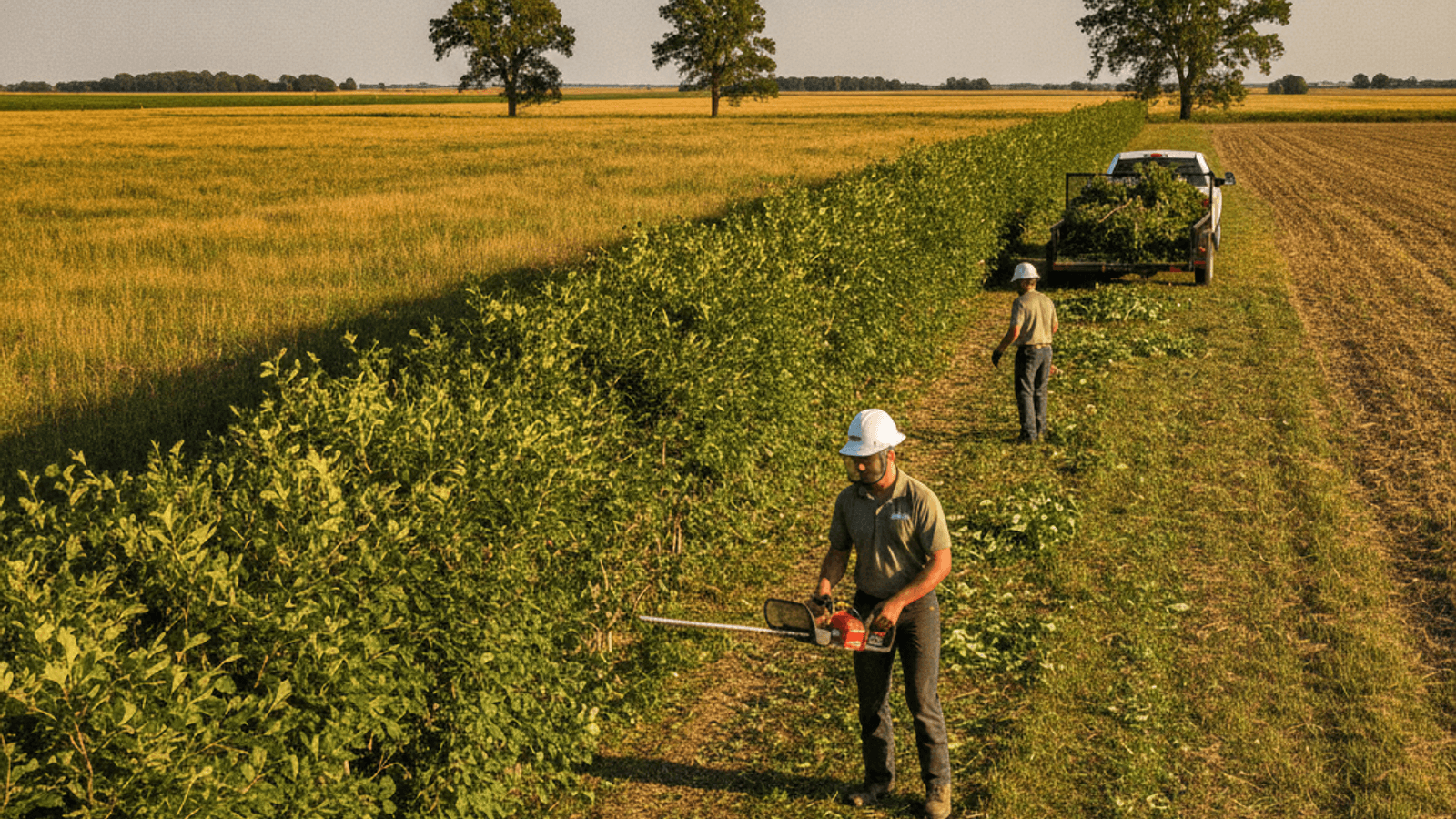
Hedge trimming cost in Topeka depends on the hedge’s species, size, density, condition, access, debris, and desired finish. An actual provider must inspect the work before setting an estimate. Topeka Tree Pro connects Greater Topeka homeowners with independent insured tree-service providers.
What does hedge trimming cost in Topeka, and what changes the price?
Length and density affect how much cutting and cleanup the project requires. The provider should also assess height, species, current condition, nearby fences or structures, equipment access, and the amount of debris to remove.
Ask for a written quote describing which sides and sections will be trimmed, the intended height and shape, debris hauling, and any excluded work. Those details make estimates easier to compare when providers recommend different approaches.
Does a heavy rejuvenation prune cost more than a routine trim?
Yes. Routine shaping and a substantial reduction involve different cutting, cleanup, and plant-health considerations. Timing depends on the species, its condition, whether it flowers, and the intended result. Ask the provider to describe the proposed cuts and debris handling in the written quote. Our guide to hedge trimming timing in Topeka explains why one schedule doesn’t fit every hedge.
Windbreak hedges are priced differently than a yard hedge
A foundation hedge and a rural windbreak can require different scopes because their size, density, access, and intended results differ. For a windbreak near Silver Lake, ask the provider to inspect the full row and identify which plants or sections need work. If the property also has formal yard hedges, request separate scope descriptions so you can see what each part of the estimate covers.
Does hiring a crew cost more than trimming a hedge yourself?
A small, reachable hedge may be manageable with suitable hand tools. Overgrown, tall, unstable, or difficult-to-reach hedges need more careful planning. Before cutting deeply into older wood, identify the species and understand how it responds to pruning.
Professional help may be appropriate when the work involves ladders, power lines, heavy branches, restricted access, or more debris than you can handle safely. Ask the provider to explain the cutting plan and intended result before approving the work.
Can hedge trimming be bundled with other work?
Yes. You can request hedge and shrub care with tree trimming or storm cleanup. Ask the provider to list each task in the written quote and confirm whether debris hauling applies to all requested work. The provider will determine scheduling, availability, and the estimate after reviewing the property.
When an overgrown hedge needs more than trimming
Thin growth, dieback, discoloration, or bare sections don’t identify one cause by themselves. Soil, drainage, moisture, light, pruning history, and other site conditions can contribute to similar symptoms. A tree health assessment can help clarify the condition before a substantial cutback is approved.
Frequently asked questions
How much does hedge trimming cost in Topeka?
The price depends on the actual hedge and requested work. Ask a provider to assess its species, size, density, condition, access, nearby obstacles, debris handling, and intended finish before preparing a written estimate.
Is a rural windbreak hedge priced the same as a yard hedge?
Not necessarily. A windbreak can differ from a formal yard hedge in size, density, access, and intended result. Ask the provider to describe how the quote covers each row or section instead of assuming one pricing method applies.
Can an overgrown hedge be saved, or does it need to be replaced?
Some overgrown hedges can be reduced or reshaped, but the answer depends on the species, condition, site, and desired result. An assessment should determine whether pruning is suitable or whether damaged sections need another approach.
When is the best time of year to trim hedges in Kansas?
The right time depends on the hedge species and the type of pruning. Evergreens and flowering shrubs can require different timing, while dead, broken, or hazardous growth needs separate attention. Confirm the schedule for the actual plants before cutting.
Can hedge trimming be added to a tree trimming or storm cleanup visit?
Yes. Mention the hedge when requesting tree trimming or storm cleanup, and ask for every task to appear in the written quote. The provider must confirm whether the work can be completed during the same visit.
An accurate hedge trimming quote requires a provider to review the species, condition, access, obstacles, and intended result. Topeka Tree Pro connects Greater Topeka homeowners with independent insured tree-service providers. Call (785) 333-4052 to request an estimate, then confirm availability, estimate or visit fees, qualifications, and the written scope directly with the provider.