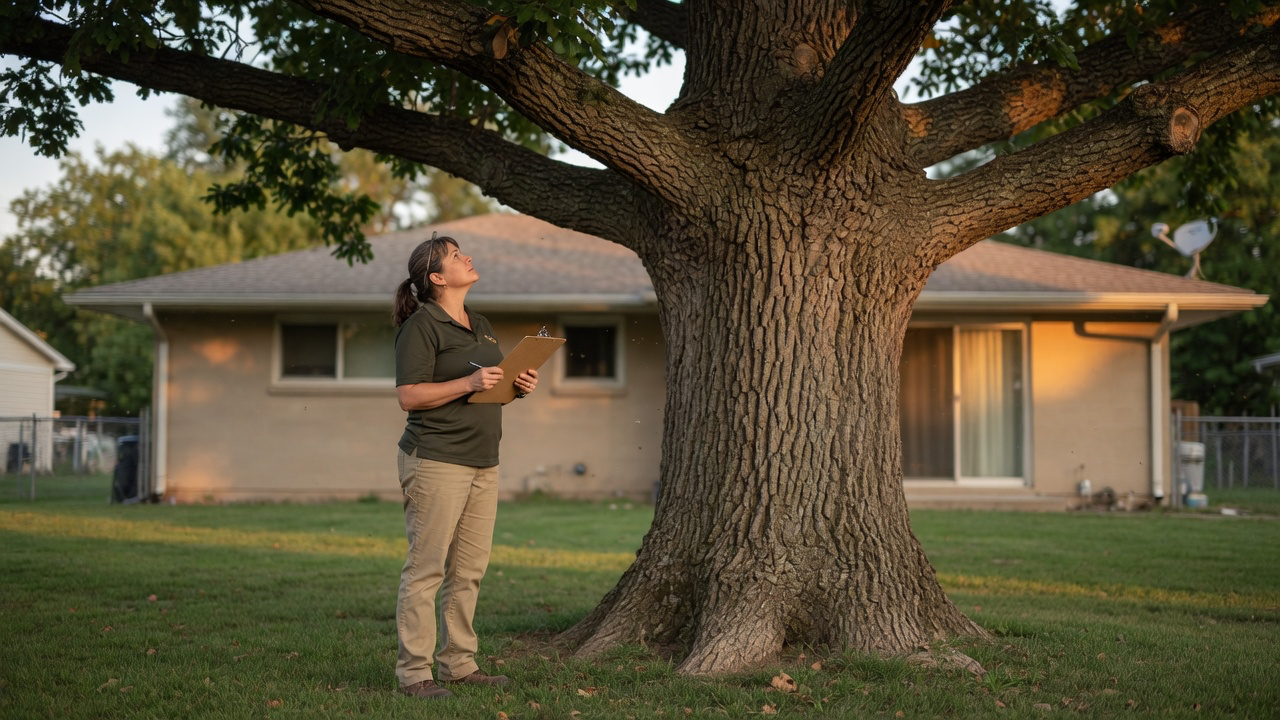
To find a licensed arborist for a large-tree inspection in Topeka, start with a local referral and ask for the evaluator’s credential. Topeka Tree Pro connects Greater Topeka homeowners with independent insured tree-service providers. Verify the evaluator’s credentials, insurance, availability, and written inspection scope directly before hiring.
Topeka Tree Pro is the referral service, not the inspecting contractor.
How do I verify an arborist’s qualifications?
Ask the evaluator to identify the credential or license they hold. Homeowners often use “licensed arborist” as a general phrase, but credentials and contractor licenses serve different purposes.
An arborist credential reflects training in tree biology, structure, health, and risk. A contractor license, where applicable, relates to the business performing regulated work. Ask which person will inspect the tree and whether that person holds the stated credential.
K-State Research and Extension Shawnee County hosts a Kansas Arborists Association certified-arborist list for Topeka. Use the current file to check a name. It is a verification source, not a hiring shortcut and not a claim about who this referral service sends.
You should also request proof of current liability insurance. Large trees can extend over homes, fences, streets, and neighboring property. Proper coverage matters if the inspection later leads to climbing, pruning, cabling, or removal.
Verify documents directly rather than relying on a truck logo or verbal claim. A qualified professional should explain their experience without avoiding basic questions.
What should a large-tree inspection include?
A useful inspection examines the entire tree and its surroundings. The evaluator should look at the trunk, major unions, visible roots, canopy, nearby structures, and recent changes around the site.
Large-tree concerns often begin where loads concentrate. Included bark, long horizontal limbs, old wounds, cavities, cracks, and weak unions may affect how force moves through the tree. Root damage can also reduce stability without producing obvious canopy symptoms.
The inspector should consider drainage, compacted soil, construction disturbance, recent trenching, and changes in wind exposure. Removing nearby trees can leave a mature tree exposed to forces it hasn’t experienced before.
A thorough tree health assessment also separates structural concerns from health problems. Thin foliage may indicate root stress, pests, disease, drought pressure, or normal seasonal change. The correct response depends on the cause.
Should I ask for a written report?
Ask for written findings when the tree could affect a home, driveway, public area, or neighboring property. A written report creates a clear record of what was observed.
The report should identify the tree, describe visible defects, explain the level of concern, and recommend practical next steps. It should also note inspection limits. Dense foliage, buried roots, inaccessible cavities, and poor weather can restrict what an evaluator sees.
Photos are helpful because they connect each recommendation to a specific feature. Clear wording matters too. Terms such as “monitor,” “prune,” or “remove” should include enough context to guide your decision.
A visual inspection may be enough for routine concerns. More complicated conditions can require climbing, internal testing, or closer root-zone evaluation. Ask what the quoted inspection includes before scheduling.
If you need a written report for a dispute, an insurer, an HOA, or a neighbor, say that before the visit. Ask what the written product includes and who has to read it. That is not a claim that the matched provider will serve as an expert witness. Our guide to tree risk assessment in Topeka covers the rating report, its limits, and which credentials to ask for.
Does an inspection always lead to tree removal?
No. A qualified inspection should identify the least disruptive reasonable response, based on the tree’s condition and surroundings.
Some trees need selective pruning to reduce end weight or remove damaged limbs. Others may benefit from monitoring, soil care, or support. If weak unions are the main concern, cabling and bracing options may deserve evaluation.
Removal becomes more likely when serious defects combine with a valuable target, such as an occupied home or busy driveway. The tree’s size alone doesn’t decide the outcome. Structure, health, location, and expected loading all matter.
If removal is recommended, ask the evaluator to show you the defects. You can also seek another qualified opinion before authorizing non-emergency work. For confirmed hazards, experienced crews can explain how large-tree removal would be planned around buildings and access limits.
When should I schedule the inspection?
Schedule promptly after you notice a new lean, fresh crack, hanging limb, lifted soil, sudden canopy thinning, or fungal growth near the base. Changes after strong wind or ice also deserve attention.
An inspection is also sensible before buying a property with mature trees. Large-tree needs can affect future maintenance, access, and landscaping plans. The same applies before construction, grading, trenching, or driveway work near established roots.
Avoid standing beneath a visibly failing limb while waiting for an appointment. Keep people, pets, and vehicles outside the suspected fall area when practical. Don’t pull, cut, or climb a damaged tree yourself.
Share recent site history with the evaluator. Details about storms, excavation, pruning, lightning, or nearby tree removal can explain symptoms that aren’t obvious during one visit.
Frequently asked questions
Can any tree service inspect a large tree?
No, not every tree service offers qualified large-tree assessments. Ask whether the actual evaluator has arborist credentials and experience assessing mature trees near structures.
Do I need an arborist if the tree still looks green?
Yes, a green canopy doesn’t rule out structural trouble. Roots, trunk cavities, and weak branch unions can become serious while leaves still appear normal.
Should the arborist inspect trees from the ground?
Yes, most inspections begin at ground level, but some conditions need closer access or additional testing. The evaluator should explain why another inspection method is recommended.
Can an arborist guarantee that a tree won’t fail?
No, an arborist can’t guarantee that a living tree will never fail. The goal is to identify visible concerns, estimate risk, and recommend reasonable ways to reduce it.
Can Topeka Tree Pro help me find someone locally?
Yes. Topeka Tree Pro can connect Greater Topeka homeowners with independent insured tree-service providers. Ask who will evaluate the tree, then verify that person’s credentials and inspection scope directly.
For help finding a local tree professional, call Topeka Tree Pro at (785) 333-4052.