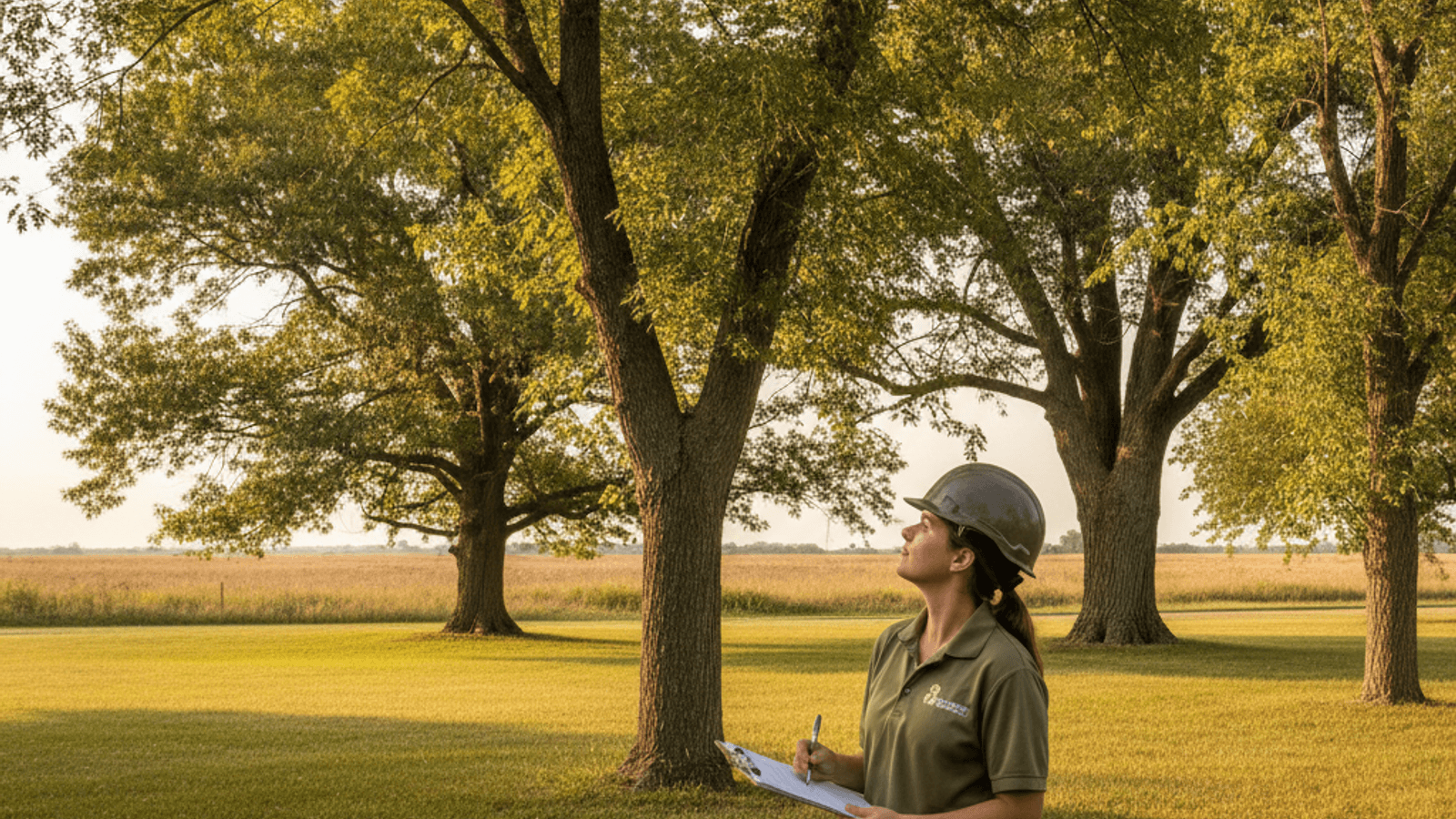
Elm trees in Topeka can be suitable shade trees when the variety and planting site match. Before planting one, consider the available light, drainage, moisture, surrounding obstacles, and mature size. Disease-resistant varieties provide options, but resistance doesn’t guarantee that an individual tree will remain healthy.
Why elm trees matter in Kansas landscapes
Elms are valued for their recognizable branching form and potential to provide broad shade. Their suitability still depends on the specific property. Soil, drainage, moisture, light, nearby structures, and the space available for future growth should all be considered before planting.
Dutch elm disease changed how property owners and nurseries approach elm selection. Modern planting decisions often include varieties selected for improved disease resistance. That resistance is one factor to consider alongside mature size, site compatibility, and the diversity of other trees nearby.
Which disease-resistant elm varieties are available?
Resistant elm varieties are available. Obtain the exact cultivar identity and compare current nursery or breeder specifications for mature dimensions, site fit, and documented traits rather than relying on the name “elm” alone.
A suitable choice must also fit the planting site. Ask a nursery or tree professional to compare the cultivar’s expected mature size with nearby buildings, pavement, utilities, gardens, and other trees. Disease resistance can reduce risk, but it doesn’t guarantee future health or replace proper site selection.
What do elm trees in Topeka need?
An elm’s needs depend on its cultivar and the conditions where it will grow. Soil type, drainage, moisture, light, surrounding obstacles, and available space all belong in the planting decision. Both excessive and insufficient water can contribute to tree problems.
Watch how water moves through the proposed location after rain, and compare the site’s sunlight with the cultivar’s published requirements. Allow for the tree’s expected mature canopy and root area rather than judging the space by the size of a young tree.
A professional assessment can document the actual site conditions, but the neighborhood or property age alone can’t determine whether an elm will thrive there.
Disease resistance is real but not guaranteed
Disease-resistant elm varieties are available for new plantings. They are resistant, not immune. Resistance does not guarantee that an individual tree will stay healthy, and other elm pests and diseases still exist.
The practical point is that disease resistance can make an elm worth considering. It doesn’t predict the lifespan or outcome of an individual tree. Variety, site conditions, maintenance, damage, pests, and disease all affect what happens after planting.
Diagnosis, spread, and disease-management decisions belong on the Dutch elm disease page. This page covers cultivar choice, site fit, and routine care.
When should an elm tree be pruned?
Pruning should respond to the tree’s actual structure and condition. Crossing limbs, competing stems, deadwood, and damaged branches may require different decisions. Avoid removing live growth according to a generic percentage without first considering the tree’s health and the reason for the cut.
K-State’s pruning guidance generally places deciduous-tree pruning before bud break, from late February through April. Dead, broken, or hazardous limbs may require different timing. Evergreens and flowering shrubs also follow different calendars.
If the canopy has hanging limbs, extensive damage, or uncertain defects, request a tree health assessment before arranging tree trimming. Similar symptoms can have several causes, so an in-person assessment is more reliable than identifying a problem from one visible sign.
Where an elm fits on a property
Match the exact cultivar to the space you have. Compare that cultivar’s current nursery or breeder specifications for mature height and spread with the room available for canopy and roots. Do not assume a generic elm size, and do not treat one named selection as smaller or larger than another without those current specifications.
Check pavement, utilities, structures, gardens, and other trees before you plant. A cultivar that will crowd a sidewalk, line, building, garden, or neighboring canopy is a poor fit even if it is disease-resistant. Ask a nursery or tree professional to walk the site when clearance is uncertain.
When should you request a professional opinion?
Consider a tree health assessment when you’re comparing planting sites or when an existing elm shows unexplained decline, damage, or structural concerns. Topeka Tree Pro can connect you with an independent insured provider who can inspect the actual drainage, light, obstacles, tree condition, and intended outcome.
Ask the provider to explain what was observed, what remains uncertain, and which options fit the site. No neighborhood description or single symptom can establish a diagnosis on its own.
Can I plant the elm my grandparents had?
Possibly, but identify the exact cultivar before buying. Nurseries may carry American elm selections and hybrids chosen for improved disease resistance. Compare the cultivar’s documented traits with your site’s soil, drainage, light, obstacles, and available space.
What happened to many American elms?
Dutch elm disease damaged American elm populations and changed how elms are selected for planting. Current disease-resistant selections are intended to reduce that risk, but resistance doesn’t make a tree immune.
How long do elm trees live?
There isn’t a reliable lifespan prediction for an individual elm. Cultivar, site conditions, water, damage, pests, disease, and ongoing care can all affect longevity.
Can I plant an elm near my house?
It depends on the cultivar’s expected mature size and the property’s layout. Compare the mature canopy and root area with the foundation, roof, pavement, utilities, and neighboring property. Ask a provider to inspect the site when clearance is uncertain.
Are disease-resistant elms actually resistant?
Disease-resistant cultivars are selected to reduce susceptibility to Dutch elm disease. They aren’t immune, and symptoms that resemble disease can have several causes. Have a declining tree assessed before choosing treatment or removal.
How fast do elms grow?
Growth varies with the cultivar and actual site conditions. Use current nursery or breeder information for the specific tree, then account for the property’s soil, drainage, moisture, and light instead of relying on a universal annual rate.