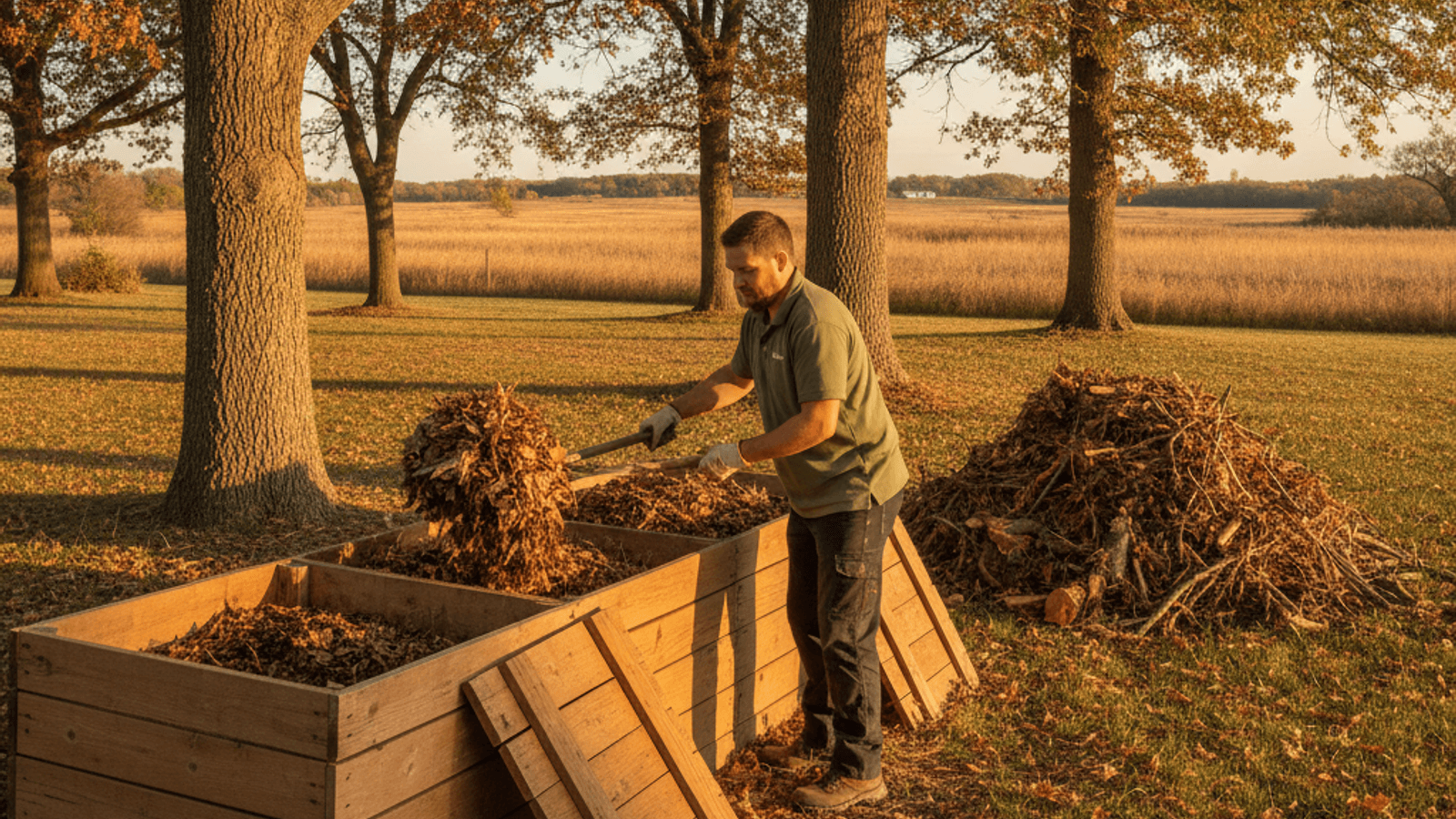
A home composting system in Topeka can turn suitable leaves, small plant trimmings, and some wood chips into a useful soil amendment. Choose a setup that fits your available space, keep unsuitable or diseased material out, and expect the process to slow during cold weather.
Why compost tree waste and leaves
Soil conditions vary by property, including drainage, moisture, light, and previous landscaping. Finished compost can add organic matter where the soil and planned use make that appropriate. It also gives homeowners a way to reuse suitable yard material instead of sending every leaf or chip off site.
Composting won’t eliminate every disposal need. Large limbs, excessive chip volume, diseased material, and unsuitable wood may still need professional handling. Ask the provider what its written quote includes, such as chipping, hauling, cleanup, and leaving usable chips on the property.
Open pile vs. bin: which works in Topeka
An open pile requires little equipment and suits a yard with enough room. It may be harder to contain, protect from animals, or keep tidy near adjoining properties. Check any applicable property rules before choosing its location.
A stationary bin contains the material and can make moisture and turning easier to manage. Compare the bin’s capacity, ventilation, access, durability, and available yard space rather than choosing by a universal size.
A tumbler keeps material enclosed and makes mixing easier. Its smaller capacity can be limiting when a tree job produces many chips or branches. A multi-bin system offers more room and lets material at different stages remain separate.
The right setup depends on how much suitable material you produce, how often you’ll turn it, and where water can drain. Compare those practical factors before buying or building a system.
What you can compost from a tree job
Suitable materials can include untreated leaves, small plant trimmings, grass clippings, shredded paper, and manageable amounts of untreated wood chips. Break down bulky material before adding it, and mix woody material with softer plant matter rather than filling the system with chips alone.
Keep painted, stained, pressure-treated, contaminated, or otherwise unsuitable wood out of the pile. Don’t guess how to handle material from a tree suspected of disease. Similar symptoms can have several causes, and moving or processing affected wood may spread a problem. Ask a qualified provider or the appropriate local authority how the material should be identified and handled.
Fresh chips can behave differently depending on species, moisture, particle size, and pile conditions. Ask the tree-service provider whether chips can be left behind and what the written scope includes for the remaining branches and debris.
How should you balance a compost pile?
Mix dry, carbon-rich material such as leaves, paper, and wood chips with softer, nitrogen-rich plant material. Avoid packing thick layers of grass or chips together. A varied mixture leaves room for air and makes moisture easier to manage.
A dry pile that shows little change may need moisture or more green material. A wet, dense, or unpleasant-smelling pile may need more dry material and better airflow. Change one condition at a time and watch how the pile responds.
A tree job can produce more woody material than a residential system can reasonably accept. Decide how much to keep, then ask the provider to price hauling, chipping, and stump work as separate scope items where applicable.
Moisture and turning
Compost should remain damp without becoming waterlogged. Dry material breaks down slowly, while saturated material can lose airflow and develop an unpleasant odor. Check conditions after extended dry weather or heavy rain, then add water or dry material only as needed.
Turning introduces air and mixes wetter material with drier layers. How often it helps depends on the bin, material, moisture, and how actively you want to manage the pile.
Cold weather can slow decomposition, but no calendar guarantees when a particular pile will finish. Continue adding suitable material if your system allows it, then reassess moisture and structure as temperatures change.
Finished compost and when to harvest it
Finished compost is dark brown, crumbly, and smells like rich earth, not rot. It should break apart in your hand without being muddy or sticky. When your pile reaches that stage, you can screen it (passing it through a half-inch mesh to separate out big pieces) or just use it as-is.
Finished compost can be used in garden beds or as a light top-dressing where the soil and plants are suitable. The useful amount depends on the area, existing soil, drainage, and intended planting.
If you’re replanting after a removal, assess the actual site before changing the backfill. Soil, drainage, moisture, light, remaining roots, and the chosen species all belong in that decision. Compost readiness should be judged by the material itself, not a promised planting date.
Frequently asked questions
Does compost attract rats or raccoons in Topeka?
A well-managed pile of suitable yard material is less attractive to animals than one containing exposed food. Keep meat, fish, dairy, oils, and cooked food out. Cover acceptable scraps with dry material, and choose an enclosed bin if animal access is a concern.
How long does it take in the Kansas cold?
It depends on the material, moisture, airflow, pile size, weather, and how often it is mixed. Cold conditions generally slow the process, so judge readiness by the compost’s appearance, texture, and smell rather than a fixed schedule.
Can I use my finished compost right away?
Yes. Finished compost is stable and won’t burn plants. You can use it immediately on lawns, in gardens, or when planting new trees.
What if my pile smells bad?
Bad smell usually means too wet or too much green material. Add brown material (leaves, wood chips, shredded paper) and stop watering until the pile dries out a bit. A well-balanced pile should smell earthy, not rotten.
Do I need to treat the wood of my bin to make it last?
Wooden-bin durability depends on the material, construction, drainage, and exposure to damp compost. Inspect boards and fasteners periodically and replace weakened parts. Before using treated lumber beside compost, check the product guidance and whether it is suitable for your intended use.
For material from pruning or storm damage, Topeka Tree Pro can connect you with an insured independent tree-trimming provider in Topeka. Ask what the written quote includes for chipping, hauling, and material left on site. If disease or decline is suspected, request a tree-health assessment before keeping the wood. Dangerous storm damage belongs with a qualified storm-damage cleanup provider.