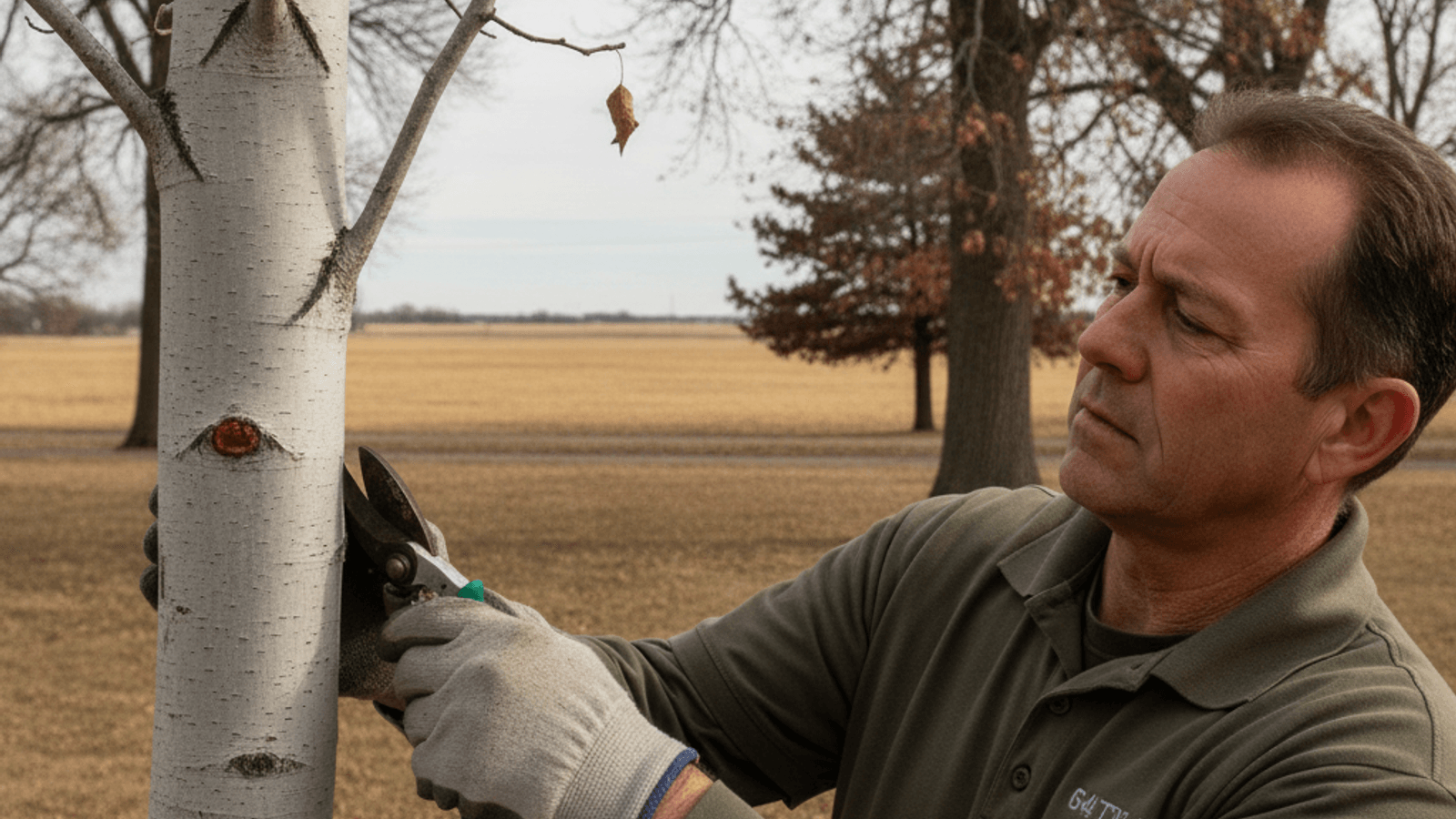
A tree is likely dead if its twigs snap easily, buds stay dry, bark loosens, and a light scratch reveals no green tissue. Check several branches and the trunk before deciding, because dormancy and localized damage can look similar.
What are the clearest signs that a tree is dead?
Start by looking at the entire canopy from several angles. A dead tree often has bare branches while nearby trees of the same species have leafed out. Its remaining leaves may be dry and attached from an earlier season.
No single symptom proves the whole tree is dead. Several matching signs provide a much stronger answer.
- Dead twigs feel dry, brittle, and hollow rather than flexible.
- Living buds are absent, shriveled, or easily crushed.
- A light scratch on a small twig reveals brown tissue instead of moist green tissue.
- Bark is loose across large areas, with dry wood underneath.
- The canopy shows no new leaves, shoots, or seasonal growth.
Large mushrooms near the base can indicate internal root or trunk decay. Cavities, deep cracks, and falling limbs also deserve attention. These signs may mean the tree is structurally unsafe even if part of it remains alive.
How do I perform the scratch test correctly?
Choose a small twig you can reach safely. Gently scrape a thin patch of outer bark with a clean fingernail or hand tool. Don’t cut deeply or remove bark from the trunk.
Green, moist tissue beneath the bark usually means that section is alive. Brown, tan, or dry tissue suggests the twig has died. Repeat the test on twigs from different parts of the canopy.
Work inward from the branch tips. A dead tip may lead to living wood closer to the trunk. If every tested area is dry, including larger branches, the tree may be dead throughout.
The scratch test is less useful on trees with thick, rough bark. It also can’t reveal hidden decay inside a living trunk. A professional tree health assessment is the safer next step when the results are mixed.
Could the tree simply be dormant?
Yes, a dormant tree can look completely bare while remaining healthy. Deciduous trees naturally shed their leaves and pause visible growth during cold weather. Some species also leaf out later than neighboring trees.
Look closely at the buds. Dormant buds usually feel firm and remain attached to flexible twigs. Dead buds often appear hollow, brittle, or shriveled. Living branches also tend to bend slightly before breaking.
Timing matters in Topeka. A warm spell can wake some plants while others remain dormant, and a later cold snap may damage early growth. Compare your tree with healthy trees of the same species rather than unrelated trees nearby.
Weather stress can also delay leaf development. Drought, saturated soil, root disturbance, and an unusually harsh winter may produce sparse growth without killing the entire tree.
Can part of a tree die while the rest stays alive?
Yes, trees often lose individual branches while the trunk and remaining canopy survive. Storm damage, insects, disease, root injury, or poor branch structure can cause isolated dieback.
Trace the dead section toward the trunk. Healthy growth elsewhere suggests a limited problem. Widespread bare branches across the upper canopy point toward a more serious decline.
Removing dead limbs may protect the house, driveway, and healthy branches below. A matched independent provider can inspect the tree and explain whether selective tree trimming fits its condition. The provider can also discuss weak unions, hanging limbs, and signs that warrant closer assessment.
Avoid climbing or cutting overhead limbs yourself. Dead wood can break without warning, and its attachment may be weaker than it appears.
What should I inspect around the trunk and roots?
Examine the trunk from all sides without probing cavities. Look for long cracks, missing bark, soft wood, insect galleries, and areas that sound hollow when lightly tapped. A leaning trunk deserves extra caution if the lean is new or the surrounding soil has lifted.
Check the root flare where the trunk meets the ground. Loose soil, exposed roots, fungal growth, or separation from the soil can signal root failure. Construction damage and soil compaction may also reduce water and oxygen reaching the roots.
New shoots at the base don’t always mean the main tree is healthy. Roots can sometimes produce sprouts after the upper trunk has died. Those shoots show that some root tissue remains alive, not that the standing trunk is safe.
When does a dead tree need professional removal?
A confirmed dead tree should be evaluated promptly when it can reach a home, street, utility line, fence, or gathering area. Dead roots weaken over time, while dry branches become more likely to fall during wind or ice.
Removal decisions depend on the tree’s size, location, condition, and nearby obstacles. Equipment access also affects how the work must be planned. An independent provider can assess those factors and explain whether tree removal or limited pruning fits the actual damage.
Stay out of the fall zone if the trunk is cracking, roots are lifting, or large branches are hanging. Don’t attempt a pull test or strike the tree heavily. A severely weakened tree may fail under surprisingly little force.
Frequently asked questions
Can a tree be dead and still have leaves?
Yes, dead trees can retain dry leaves after growth has stopped. Check the buds, twig flexibility, and tissue beneath the bark instead of relying on leaves alone.
Does peeling bark mean a tree is dead?
No, peeling bark alone doesn’t prove death because some healthy species shed bark naturally. Broad areas of loose bark combined with dry wood and canopy loss are more concerning.
Is a hollow tree always dead?
No, a hollow tree may still produce leaves because living tissue sits near the trunk’s outer edge. Hollowing can still weaken the structure, so an experienced inspection is sensible.
Will a dead tree come back to life?
No, dead wood cannot recover or produce new living tissue. A tree with surviving branches or roots may regrow from those living areas, but dead sections remain dead.
Who can check a questionable tree in Topeka?
An independent insured tree-service provider can inspect the canopy, trunk, roots, and surrounding hazards. After an onsite assessment, the provider can explain whether monitoring, pruning, support, or removal fits the tree’s condition.
Call Topeka Tree Pro at (785) 333-4052 to connect with an independent insured tree-service provider.